How to Clean Wood Furniture and Care for Antiques
“Know what you have,” said Montreal restorer Michael Matarov. Find out what to use on your wood furniture and what to ask before you approve restoration.
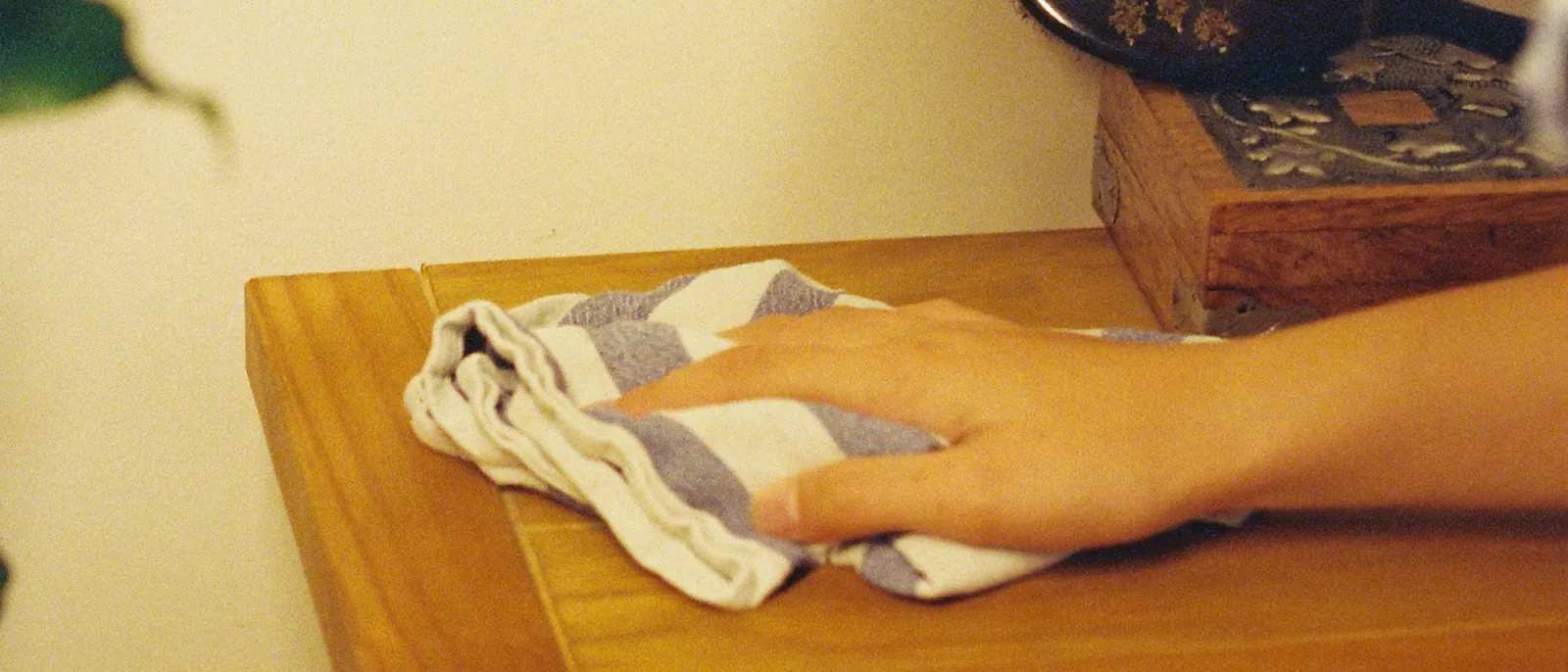
How to Clean Wood Furniture
Dust wood furniture with a slightly damp cloth, then buff with a dry, soft cloth.2 A lot of furniture made before World War I (1914) is sensitive to water, so use a dry cloth only on those pieces.2
Before you choose a cleaner or approve a repair, take Montreal furniture restorer Michael Matarov's advice: “Know what you have.”15 He shared the advice and stories here in an interview for the original guide.
Check the maker's instructions for how to clean dirty wood furniture with a sound modern finish. Wring out a damp cloth thoroughly, wipe with the grain, and dry the surface after cleaning.411 If the maker permits mild dish soap for dirt that water won't remove, wipe away the soap residue and dry again.10
What should you not clean wood with? Keep water away from unfinished wood.2 Stop if the coating comes off, softens, or turns cloudy during cleaning.1
If you find loose veneer, flaking paint or an unidentified antique finish, get professional advice before you continue.13
If you need to know how to clean mold off wood furniture, first isolate the affected piece. Correct the moisture problem before arranging suitable cleaning.17
Before you decide how to clean old wood furniture naturally, find out which coating is on it. Knowing the wood species won't tell you that. Our guide to the best wood for kitchen cabinets covers species choices.
Before you clean, check whether the finish is still sound.
How to Clean Antique Wood Furniture Without Damaging the Finish
You can gently remove visible dust from a stable antique surface with a clean, soft, dry cloth. Ask a conservator before wet cleaning it.3
Look over your piece before you wipe it. You can catch loose veneer or decorative parts with the cloth fibers and dislodge them even while dusting.3 Leave those areas alone.
To decide how to clean antique furniture without stripping its finish, first identify the coating and check its condition.8 The method below applies only to a sound natural resin finish.1 Take Asian lacquer and unidentified coatings to a conservator.13
Leave cracked, raised or flaking coatings for assessment.19 Remove loose dust with a soft cotton cloth before cleaning.19
Test warm water on a hidden spot with an almost-dry cotton swab. Stop if yellow or brown finish transfers or the surface turns cloudy. Let the test area dry before judging it.
If the test area is unchanged, clean with a barely damp cotton cloth and dry immediately.1
For stubborn dirt, Canadian conservation guidance permits a little mild detergent in the water after a separate test. Remove its residue with a barely damp cloth and clear water, then dry immediately.1 The National Park Service says never to use detergents.19
The sources differ on detergent use. Ask a specialist which advice to follow for your finish before using detergent. Stop if gentle cleaning doesn't remove the grime; don't scrub.8
| Finish | What to use | What to avoid |
|---|---|---|
| Shellac or traditional varnish.4 | Dry dusting; the tested damp-cleaning method above on a sound coating.1 | Untested water or alcohol; both can damage traditional resin finishes.4 |
| Oil finish.4 | The same limited, tested cleaning methods as for resin finishes.1 | Adding oil over another existing finish.4 |
| Wax finish.19 | Gentle dry dusting when wax is the original finish over bare wood.19 | Applying the clear-finish cleaning method to original wax; it can remove or damage it.19 |
| Painted or gilded surface.118 | Soft, dry dusting on stable paint; specialist advice for fragile gilding.118 | Household wet cleaning of antique paint, or water and rubbing on gilding.118 |
| Synthetic coating.13 | A slightly moist sponge on an identified, intact, water-impermeable polyurethane coating; dry immediately.13 | Vinegar on polyurethane where the maker prohibits it.10 |
Before you decide how to clean antique furniture stains, have persistent stains assessed. Removing a stain from antique wood can also remove wood and patina.13
Here's how to clean antique furniture hardware: buff metal hardware gently with a clean, dry cotton cloth. Metal-polish abrasives and ammonia can damage the surrounding wood and finish.2
An old finish can contain evidence about how a piece was made and used.12 Keep that evidence when you clean. If you hope to restore old furniture without stripping, a conservator may be able to improve an original finish without removing it.2
For newer built-in bookshelves, keep the maker's finish specification and care sheet with your furniture records. You'll need to know the finish when you choose a cleaner.
Vinegar, Oil Soap and Other Home Cleaners
Vinegar and oil soap aren't suitable for every piece of wood furniture. What you can safely use depends on the coating.10
One furniture maker gives a ratio of 4 parts water to 1 part vinegar for lacquered furniture and says never to use vinegar on polyurethane.10 Find out which finish you've got before choosing a cleaner. That ratio isn't a safe recipe for an unknown antique.
The same manufacturer advises against oil-based soaps. It allows a little dish soap in warm water for most commercial wood finishes, followed by wiping away residue and drying thoroughly.10 Follow your own maker's instructions.
For an antique, ask a conservator what to use.3
How to Polish Wood Furniture: Wax, Oil or Spray?
A suitable paste wax may help a sound clear finish, but an antique doesn't automatically need more polish. To decide which type of polish is best for antique furniture, check the existing finish and its condition.24
Michael Matarov recommended natural beeswax in the original guide.14 If you're considering beeswax for furniture, conservation guidance supports it as an ingredient in paste wax for a suitable, sound clear finish.4 It also permits other waxes, including microcrystalline wax on suitable handled surfaces.2
When choosing beeswax for wood furniture, check the existing finish and its condition. “Natural” alone doesn't establish suitability.24
The Canadian Conservation Institute describes most finishes as separate protective coatings.1 That doesn't mean every polish stays entirely above them. In conservation training, a furniture conservator explains that non-drying oils can enter a varnish or finish and stain the underlying wood over time.8
What is the best oil to put on antique furniture? There isn't a single best oil. Continued linseed oil use may be acceptable only when that was the original finish.1
For routine maintenance, use suitable paste wax over a sound clear finish. Keep it off bare wood: wax can enter the pores and become difficult to remove.4 If your piece is painted, gilded or has an unusual surface, get advice for that surface.1
Canadian guidance allows microcrystalline wax once a year on handled surfaces and warns against buildup.2 That's the limit for this particular recommendation. Before you follow it, check whether wax is appropriate for the finish, use and condition.
If you're deciding how to make antique furniture shine, try buffing the existing wax first. If you get the sheen you want, more wax may be unnecessary.4
Why Conservators Avoid Silicone Sprays
Silicone in furniture polish can contaminate a finish and interfere with later treatment.4
When a conservator retouches or recoats the piece, a new coating may not adhere properly.8 That's a reason to avoid silicone sprays on antiques.
Tell a restorer which polishes you've used. They need that history to assess the surface before treatment.
How to Remove Water Stains and White Rings
A white ring usually indicates damage in the upper layers of the finish; a dark ring often means that water has passed through the finish to the wood.8
Heat marks can be white when the finish has poor resistance to heat.7
For a white ring in the upper finish, a furniture conservator describes using a little plain white toothpaste on a soft white cloth and buffing gently. Its fine abrasive can make the ring less visible.8 Stop if it doesn't help.
A dark or black ring needs a conservator's assessment.8
A finishing reference explains that white-ring damage can remain within the topcoat or extend to the wood.7 It also warns that abrasive removal can leave a different sheen or cut through the coating.7 Avoid trying an abrasive treatment first on an heirloom.
If you've just spilled something, remove the moisture promptly and dry the surface.10 Use coasters to protect the finish from future spills.2
If a ring remains on a known modern finish, ask the maker what to do. For an antique, ask a restorer or specialist. Have a dark mark or a lifting surface assessed before treatment, too.
How to Fix Scratches on Wood Furniture
A color-matched furniture touch-up product may disguise a minor flaw on modern furniture when the manufacturer recommends it.6
With a touch-up, you're changing the appearance. You aren't replacing missing wood or repairing a loose joint. Before you decide how to get scratches out of wood furniture, check the maker's instructions and color match.
Keep ordinary furniture markers away from an antique's original paint, gilding or unidentified finish until a specialist has assessed it.112
For deep damage, lifting veneer or loose parts, get a repair plan. Keep any detached parts and tell the restorer where they came from.12
What Not to Do to Antique Furniture
Before making an irreversible change, find out how the piece was built, which surfaces are original and why they're significant.1213
What is patina on wood? Wood patina is the aged appearance of a finish, including wear, changes in color and a softer sheen.4
Don't sand away patina to make an old piece look new. This advice hasn't changed. Even in a 2002 interview, restorer Michael Matarov said, “the problem with sanding is that it changes the color of the piece”.14
Current conservation guidance supports preserving aged surfaces and evidence of use that can contribute to value.1213 Don't casually paint over significant original decoration, replace repairable original veneer or cut a piece into a different form.1314
You won't protect an antique from humidity damage just by using it. Use itself can cause wear, and changes in humidity can loosen veneer and joints.3 Keep the environment stable and have the piece assessed if it's unsafe to use.3
Get It Appraised Before You Restore
Find out what a potentially valuable antique is before you approve work that changes its surface or structure.15
“Know what you have,” said Montreal restorer Michael Matarov in an interview for the original guide.15 Both of these stories and their estimates come from that interview. The prices are historical estimates.
Matarov recalled restoring a piece bought from a major auction house. Everyone had thought it was gilded plaster. During restoration, he found porcelain covered with gold powder.
He described the use of gold powder as an uncommon Asian technique. He identified the object itself as English and about 200 years old at the time.15
He said it had cost about $2,000. His estimate of its value: “$5000 easy.”15 “Even the large auction houses make mistakes,” he said.15
“Things like that happen very often.”15 He'd gone to auctions with clients, too. His advice when you think you know an auction piece's value: “get a second opinion.”15
In another case, a family brought him a large sideboard inherited from grandparents. They believed it was Scottish.
Matarov identified it as French. The owner was surprised: the family had told him Scotland. He estimated about $25,000 for a Scottish piece and $50,000 to $60,000 for the French piece.15
His point was that the owner would know what he was selling if he chose to sell it. “No one can fool him.”15
Before you approve work on your own piece, bring photographs, family records, old receipts and any previous treatment information to an assessment. Ask separately about identification, value and the proposed work.
Restoration or Refinishing: Which Do You Need?
The difference between furniture restoration and refinishing is that refinishing removes and replaces a surface coating; restoration can include repairs and treatment that retain existing material.1412
For historic furniture, preserving original material is an important treatment goal.4 If you remove a significant finish, you can erase evidence and reduce value.12 You may decide differently for a worn everyday piece, but you can't assume refinishing will increase its resale value.
Ask what can be kept, what must be changed and why. Think about how you'll use the piece and what it means to your family.
Consider the quote separately from any expected sale price. Ask for an appraisal of value and a treatment proposal for the work.
Which Finish Is on Your Piece?
Find out which coating is on your piece before choosing care products. The finish type and condition determine what treatment it can tolerate.1
| Finish category | What it means for care |
|---|---|
| Traditional resin finishes, including shellac | These coatings may be sensitive to cleaning liquids. A degraded coating needs specialist advice.1 |
| Oil finishes | Follow the instructions for that finish. Adding drying oil over another coating can create a dark, gummy deposit.1 |
| Synthetic coatings | These are a varied group. Their label alone doesn't establish a replacement schedule or compatibility with an old surface.113 |
Matarov's original guide grouped finishes as traditional, oil and synthetic.14 Those are useful categories, but you can't identify the finish on your particular piece from that list alone.
The finish choices in our white oak cabinets guide are for newly specified work. If you inherit a piece or buy an antique with an unknown coating, ask for separate care instructions.
How Much Restoration and Refinishing Cost
An April 2026 cost guide puts a full furniture refinish at $500–$1,000 per piece, depending on its size and complexity.16 That work involves replacing the finish.
How much does it cost to restore antique furniture? Conserving an antique's original surface needs a separate assessment and quote.416
In 2026, one restorer serving San Antonio and Austin lists $250–$450 per chair for full refinishing, including removal of the old finish, surface preparation, staining and sealing.9
The regional table below gives prices for specific pieces from one San Antonio and Austin restorer.9 Its chair range is lower than the general range above, while its larger-piece ranges overlap or exceed it.916 The dining-set price covers multiple pieces and can't be compared directly with a per-piece figure.9
Compare these examples of furniture refinishing cost from the same regional price list.9
| Piece | Published 2026 price | Stated scope |
|---|---|---|
| Single chair | $250–$450 per chair | Full refinish with lacquer or oil finish.9 |
| Coffee table, end table or small dresser | $400–$800 per piece | Full refinish with stain matching.9 |
| Dining table or large dresser | $700–$1,400 per piece | Stain or paint, with a multicoat seal.9 |
| Dining set | $1,200–$2,000 per set | Table and chairs, coordinated stain matching and full refinishing; chair count unspecified.9 |
These are one business's regional refinishing ranges. They aren't prices for conservation treatment. Get a quote after inspection.
Ask whether the quote includes repairs, transport, hardware work and any other service you need.
Matarov also gave these loose time estimates for the original guide.14 They're historical estimates of his work. They aren't present shop lead times or curing periods.
| Piece | “Original finish,” his label | Oil | Synthetic |
|---|---|---|---|
| Armoire | 2–3 weeks | 1 day | 4 days |
| Chair | 1 week | 1 day | 4 days |
| Kitchen table | 10 days | 1 day | 4 days |
Source: Matarov's original guide.14 He used “original finish” to describe replacement with shellac or varnish.14 Confirm the materials and treatment proposed for your piece.
Ask when the shop can take it, when the work will be complete and when you can safely use it again. Those are separate dates.
How to Choose a Restoration Specialist
Choose a specialist who can explain how they'll preserve the parts of the piece that matter to you.4
Ask a restorer or experienced woodworker to show you comparable work they've completed and give you a written proposal. It should say which surfaces and parts they'll keep, what repairs and finish work they'll do, the price and the schedule. Ask how they'll document any changes.
Our questions to ask a cabinet maker can help you discuss scope and responsibility. For antique work, ask about original material and previous treatment, too. If you're also considering newly made furniture, see our custom cabinets versus big-box stores guide.
Don't approve a complete refinish just because it's the first treatment offered. Ask whether a more limited repair or cleaning can give you the result you need while keeping the original finish.12
Questions people actually ask
What not to do to antique furniture?
Avoid stripping, sanding, repainting or altering an antique before its original surfaces and significance have been assessed.1213 Stop cleaning if the finish lifts, softens or changes appearance.1
What is the best cleaner for antique wood furniture?
Dust wood furniture with a slightly damp cloth, then buff with a dry, soft cloth.2 A lot of furniture made before World War I (1914) is sensitive to water, so use a dry cloth only on those pieces.2 Before you wet clean an unidentified antique finish or treat accumulated grime, ask a conservator.3
Is Murphy's oil soap good for wood furniture?
Some manufacturers advise against oil soaps for frequent cleaning, so check your furniture maker's instructions.11 A furniture conservator also lists oil soap among the polishes and sprays that cause problems on museum furniture.8 For an antique or unidentified finish, get a conservator's advice before using a liquid cleaner.3
Does refinishing antique furniture devalue it?
It can. If you remove a significant original finish or patina, you can reduce monetary value and destroy historical evidence.12 The result depends on the piece and the proposed treatment, so get it assessed before approving removal.
Is it worth restoring old furniture?
It depends on the treatment quote, the piece's condition, how you'll use it, what it means to your family and its independently assessed value. You can't count on refinishing as an investment. Preservation guidance favors keeping important original surfaces where possible.12
What is the 100 year rule for antiques?
For United States Customs and Border Protection purposes, an antique must be over 100 years old at importation.5 That's a specific customs definition. Age alone won't tell you its value or how to treat it.
Can I use Dawn to clean wood furniture?
Some manufacturers permit a little mild dish soap in water on compatible modern finishes, followed by wiping away residue and drying.10 You can't assume that's safe for an antique. Check its finish and care instructions first.3
How do I get my wood furniture to shine again?
Start by identifying the finish and removing dust safely. If existing wax buffs to the desired sheen, more may be unnecessary.4 For suitable handled surfaces, Canadian conservation guidance limits microcrystalline wax to once a year.2
Where these numbers come from
- Canadian Conservation Institute: Care of Furniture Finishes
- Canadian Conservation Institute: Basic care of furniture and objects of wood
- North Carolina Historic Sites: Caring for Your Furniture
- National Park Service: Museum Handbook, Part I, Appendix N (2002)
- United States Customs and Border Protection: Antiques and artwork (2026-10-26)
- Ashley: Wood furniture care
- Woodcraft: Removing White Rings (updated 2026-05-25)
- Connecting to Collections Care: Historic Furniture webinar transcript (2016-01-14)
- Weathersby Guild San Antonio and Austin: 2026 furniture refinishing prices
- Stickley: Caring for Craftsman Furniture (2024-01-23)
- Stickley: Furniture Care Guide
- Wood Object Care: American Institute for Conservation care text, reproduced
- Western Australian Museum: Conservation and Care of Collections (2017)
- Michael Matarov, original furniture-care guide, based on the 2002 interview.
- Michael Matarov, interview notes, December 2002.
- HomeGuide: How Much Does Furniture Repair Cost? Furniture Refinishing Costs (April 13, 2026)
- Canadian Conservation Institute: Mould Prevention and Collection Recovery, Technical Bulletin 26
- Getty Conservation Institute: Cleaning of Wooden Gilded Surfaces
- National Park Service: Cleaning Wood Furniture, Conserve O Gram 7/1 (July 1993)