Custom Cabinets vs Home Depot and Lowe's: What the Sticker Price Hides
A big-box cabinet price can be excellent. First make it carry the same installation, trim, repair, and responsibility as the custom quote beside it.
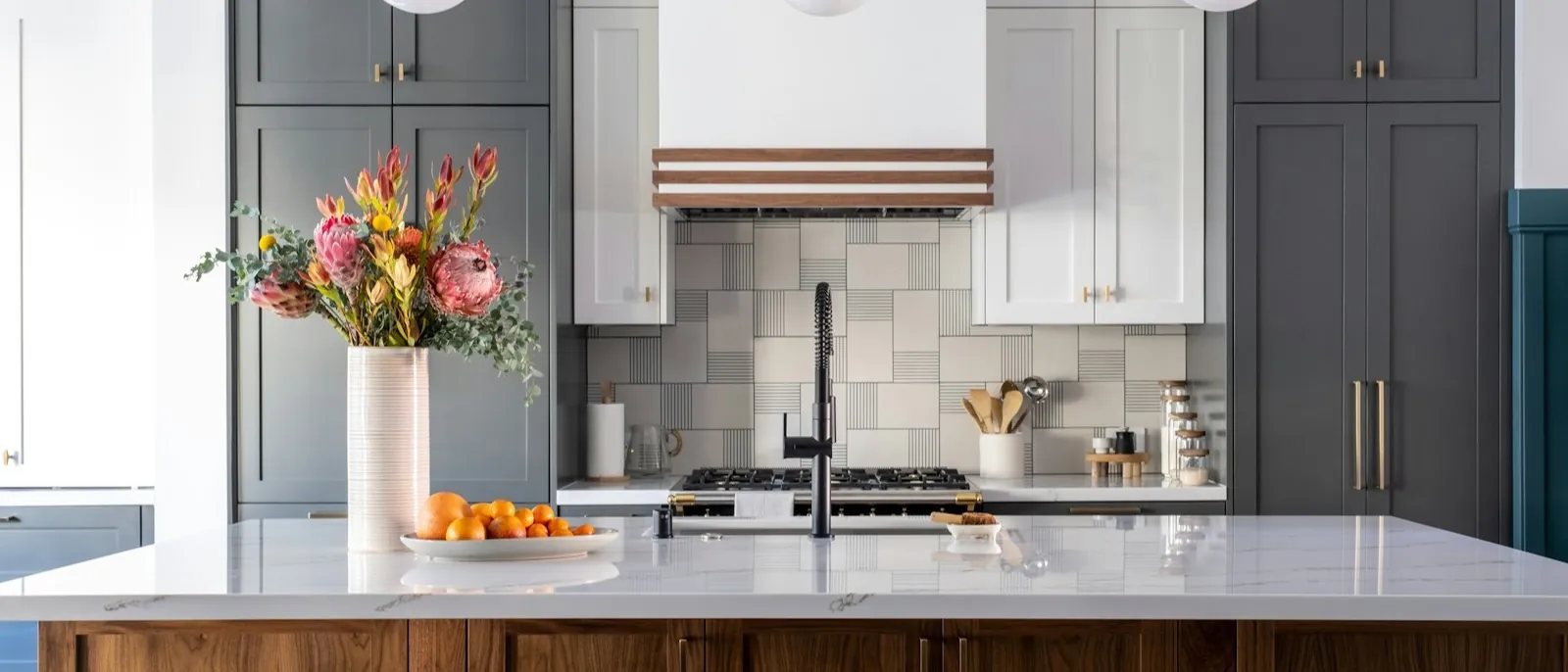
| Decision | Big-box stock | Big-box special order | Custom |
|---|---|---|---|
| Installed price range | About $100–$400 per linear foot installed | About $150–$700 per linear foot installed | About $500–$1,200 per linear foot installed |
| Box material | Commonly furniture board or engineered wood; some lines use plywood or mixed construction. Read the exact product specification | Furniture board, plywood, or upgrade combinations depending on manufacturer and line | Specified for the job; often veneer-core plywood at structural boxes, with MDF, plywood, veneer, and solid wood used by component |
| Sizing increments | Fixed catalog widths, commonly in 3-inch steps, with standard base and wall depths | Catalog sizes plus line-specific modifications, depths, accessories, and finish options | Drawn to the room, subject to appliance, door, hardware, material, and installation limits |
| Lead time | Days or the same week when the needed pieces are actually in stock | Commonly 4–8 weeks; confirm the current line and finish | Commonly 6–16 weeks after approved drawings; complex work can take longer |
| Who installs it | Owner, independent contractor, or retailer-arranged installer; define delivery, installation, trim, and return trips | Owner's contractor or retailer-arranged installer; design and installation may be separate contracts | The cabinet shop or its installer often owns fabrication and installation, but the contract must say so |
| Warranty handling | Usually follows the manufacturer's written warranty through the retailer or authorized dealer; receipt and inspection may be required | Manufacturer terms control; retailer, dealer, and installer roles must be identified | Shop warranty plus separate finish and hardware terms; no universal duration or remedy |
| Lifespan | No channel-wide number applies. Construction, installation, moisture, use, and replacement-part availability control service life | No channel-wide number applies. Better specifications can improve repairability, but a special order label is not proof | No channel-wide number applies. Repairable finishes, replaceable hardware, robust construction, and an available shop can extend useful life |
Big-box stock is best for a rental, flip, laundry room, simple kitchen, or hard deadline where available standard cabinets solve the job without expensive filler and trim work.
Big-box special order is best for a standard room that needs more finish and configuration choices than stock but does not need every cabinet built to a unique dimension.
Custom is best for an awkward or long-term kitchen where exact fit, specific storage, finish control, and one builder's accountability are worth the premium.
The big-box estimate is less than half the custom estimate.
Easy decision, right?
Maybe. But first put your finger on the line that pays for delivery, installation, finished ends, crown, toe kick, fillers, appliance panels, hardware upgrades, wall repair, touch-up, and the return trip when a cabinet arrives damaged.
Cannot find it?
Then you are not looking at a clean price difference. You are looking at two different jobs.
That is the whole comparison.
The sticker-price trap
A cabinet price can mean at least four things:
- One cabinet box
- A cabinet order with fronts and standard fittings
- Delivered cabinets ready for someone else to install
- A completed cabinet installation with trim, panels, adjustment, and touch-up
The first number is useful for shopping.
The fourth number is useful for budgeting.
Stock big-box cabinets can be a genuine bargain. Many arrive fully assembled, and standard sizes keep factory costs down. Boxes-only stock can start around $60 to $200 per linear foot, which is exactly why a stock quote can look four times cheaper than an installed custom quote that is measuring a different job.
If the room accepts those sizes and the finish is available, a skilled installer can turn them into a clean kitchen without pretending they are custom.
The trouble begins when a boxes-only or delivery-only number sits beside a custom installed quote.
That is apples beside a whole damn fruit basket.
Our custom cabinet cost guide owns the complete cost breakdown. Use its checklist to put design, material, hardware, delivery, installation, trim, site repair, and exclusions into the same columns.
Do not rebuild the budget from a handful of internet averages.
What special order really means
Special order can be very good cabinetry.
It can also be badly described.
At Home Depot or Lowe's, special-order cabinets are generally selected from a manufacturer's program. The line may offer more door styles, finishes, species, interiors, organizers, depths, and size modifications than the stock aisle. A designer helps configure the order, and a factory builds it after approval.
That is different from a cabinetmaker starting with the measured room and fabricating whatever dimensions the drawing requires.
Put the “good” against “bad” argument aside. The useful distinction is catalog flexibility against drawing flexibility.
Ask the special-order designer five direct questions:
- Which widths, heights, and depths are standard?
- Which dimensions can be modified, by how much, and at what charge?
- Which box, back, shelf, drawer, door, and finished-end materials are included?
- Which hardware and interior fittings are standard, and which are upgrades?
- Who owns a measuring error, freight damage, factory defect, or installation conflict?
If the answers solve the room, special order may be the value winner. Paying custom money for customization you do not need is no victory.
Fit, 3-inch increments, and filler strips
Stock cabinet lines commonly step through widths in 3-inch increments. Current Lowe's examples include 18-, 21-, and 33-inch cabinets, while current Home Depot examples include 24-, 30-, and 36-inch cabinets. Base boxes commonly finish around 24 inches deep, while wall cabinets commonly finish around 12 inches deep; the exact dimensions vary by line.
Those increments make manufacturing efficient.
Walls do not care.
Imagine a cabinet opening that measures 25 inches after door casing and appliance clearance are protected. If the chosen stock line offers 24 inches and the next size is too large, the plan uses a 24-inch cabinet plus about an inch of filler or clearance. A custom shop may build a cabinet for the usable opening.
Now, that extra inch is not automatically storage.
A drawer beside a wall may need a filler so its pull clears the casing. An out-of-plumb corner may need scribe material. A refrigerator panel may need air space. Good custom work uses fillers too.
The question is whether each strip has a job.
Require the plan to label every filler, end panel, blind corner, and inaccessible void with a finished dimension. Then ask whether the gap protects an opening part or merely absorbs a catalog limit.
Small gaps repeat beside ranges, dishwasher panels, blind corners, and the ends of runs. Together they can consume a useful drawer bank.
That is where the stock saving can begin to buy compromise.
Box material: read the line, not the storefront
“Home Depot cabinets” and “Lowe's cabinets” are not material specifications.
The retailers sell multiple lines. One stock product may use a furniture-board box with a laminate finish. Another may combine engineered-wood sides, a solid back, wood face parts, and an all-wood drawer. A special-order line may offer plywood as an upgrade. The door material may differ from the box.
Custom varies too.
A strong custom schedule might call for veneer-core plywood boxes, MDF painted fronts, hardwood drawer sides, solid wood face frames, and veneered finished ends. Another shop may use furniture board successfully in a tested construction. The material name alone does not reveal joinery, hardware, finish, or installation.
So ask for the schedule by component:
- Box sides, tops, bottoms, and partitions
- Back and hanging strips
- Fixed and adjustable shelves
- Drawer boxes and bottoms
- Doors and drawer fronts
- Finished ends, fillers, toe kicks, and molding
- Sink base and other wet-risk parts
Then compare thickness, core, edge treatment, finish, and warranty. A plywood upgrade on one line may apply to the box sides but not every panel. “All wood” may describe the face while the broad panels remain engineered wood.
Read the line. Not the storefront sign.
Availability is a real advantage
Here is the concession cabinet-shop articles hate to make:
THE CABINET YOU CAN INSTALL THIS WEEK CAN BE BETTER THAN THE CABINET YOU CANNOT GET BEFORE CLOSING.
Stock cabinets earn their name because standard pieces are made ahead of the order. When the needed sizes and finish are on hand, a project can move in days instead of waiting through a factory or shop schedule.
That matters in a rental turnover, a damaged-kitchen repair, a flip with carrying costs, a laundry room, or a house that must close on time.
Check actual inventory, not the category promise. A full stock plan is only as available as the missing sink base, end panel, or matching toe kick. One delayed finish piece can hold the final photo and inspection hostage.
Special order gives up some speed to gain choice. Our live custom vs semi-custom vs stock guide uses 4 to 8 weeks as a planning range for semi-custom and 6 to 16 weeks for full custom.
Confirm the current lead time in writing after the drawing, finish, and modifications are locked.
What happens when a cabinet arrives damaged
Cabinets travel through warehouses, trucks, garages, and construction sites.
Damage is not a theoretical problem.
Before ordering, write down the claim path.
For a big-box order, the responsible parties may include the retailer, cabinet manufacturer, freight carrier, designer, measuring service, and installer. The warranty may require a receipt, inspection, photographs, and a claim through an authorized dealer. Freight damage may follow a different process from a manufacturing defect.
Ask:
- Who inspects the delivery, and how quickly?
- Who reports concealed damage after a carton is opened?
- Who orders the replacement?
- Who pays the installer to return?
- What happens to the schedule while the part is remade?
- Who owns a cabinet that fits the approved plan but conflicts with the field condition?
A local custom shop often gives you one number to call because it measures, fabricates, delivers, and installs.
Often is not always.
If the contract splits finish, hardware, freight, or installation among vendors, make the correction path just as explicit.
Accountability is not a feeling. It is a name beside each risk.
When the lower quote stays lower
Sometimes the stock quote survives every correction and still wins by a mile.
Good.
If the room is standard, the layout is simple, the chosen product is available, the material meets the job, and a capable installer has included the finishing work, buy the advantage.
Custom work does not earn its premium by existing. It earns it by solving problems the other path leaves behind.
Special order can win the same way. A factory line may provide the finish, door, plywood option, organizers, and modifications the room needs at a price below a one-off custom build.
Choose custom when the comparison keeps exposing costly compromises: broad fillers, unusable corners, odd depths, finish mismatch, appliance conflicts, storage that will not fit, or responsibility scattered among people who can point at one another.
Questions people actually ask
Custom cabinets vs Home Depot?
Home Depot is often the better buy when price and availability lead the decision, and its stock and special-order programs give you plenty to choose from. Custom earns more of your budget with exact fit, design freedom within construction limits, and the possibility of keeping design through installation under one shop.
Name the Home Depot line. Then compare its complete installed scope with the custom bid; “Home Depot” and “custom” are much too broad to price across the table from each other.
Custom cabinets vs Lowe's?
If a Lowe's stock or special-order line fits the room and stays cheaper after installation, Lowe's may be the smarter choice. Take the savings.
Custom starts to make sense when fixed sizes waste useful space, your finish or storage needs fall outside the catalog, or you want one builder to own the field measurement, fabrication, fit, and touch-up.
Custom cabinets vs builder grade?
Builder-grade cabinets keep a construction project moving with a repeatable specification, fast purchasing, and a controlled budget. Custom costs more, then has to earn that premium through better fit, tighter material control, useful storage, finish, hardware, or repairability.
Our cabinet tier guide shows where stock and builder-grade work fit in the wider market.
Custom cabinets vs prefabricated?
Prefabricated cabinets are made in standard sizes before anyone measures your finished room. Custom cabinets are built from the drawing approved for that room.
If the prefabricated sizes and finishes land cleanly, there is no prize for spending more. Choose custom when the plan needs dimensions, details, or one party's responsibility that the catalog cannot provide.
Custom cabinets vs prefabricated cost?
Plan on roughly $100 to $400 per linear foot installed for stock prefabricated cabinets and $500 to $1,200 per linear foot installed for full custom. The ranges are wide, and custom still starts much higher.
Before you compare totals, make both quotes carry delivery, assembly if needed, installation, fillers, panels, trim, hardware, touch-up, and repairs. Missing work has a nasty habit of appearing after the “cheaper” bid wins.
Does Home Depot install kitchen cabinets?
Yes. Home Depot sells cabinet installation performed by licensed, insured, background-checked independent installers, with a one-year labor warranty.
For a homeowner who wants a national retailer standing behind the job, that matters. Before you sign, put the responsibilities on paper: who measures, what the installer includes, and who pays for the return trip if the approved plan and the room don't agree.
Does Lowe's install kitchen cabinets?
Yes. Lowe's uses licensed, insured, background-checked independent installers and includes a one-year labor warranty with cabinet installation.
Keep the product warranty beside the installation agreement. If something goes wrong, you want to know whether the cabinet manufacturer, Lowe's, or the installer is writing the check. You do not want to discover the split while your kitchen is torn apart.
How much does Home Depot cabinet installation cost?
Home Depot has no single national cabinet-installation rate. For planning, use about $100 to $400 per linear foot installed for stock cabinets, then get the project quote for your room.
Cabinet count, room size, removal, trim, location, and the exact scope can all move the price. And that planning range is for an installed stock project, not a Home Depot labor-only promise.
Your quote should account for delivery, installation, fillers, panels, molding, touch-up, and the return trip for a damaged part. Otherwise you are comparing a partial big-box price with a complete custom price.
Does Home Depot measure for kitchen cabinets?
Yes. Home Depot offers kitchen measurement as part of its project and installation process.
Ask one more question while the tape measure is out: who pays if that field measurement is wrong? Put the answer in the signed agreement, because the store designer, the measuring provider, the installer, and you may all have touched the approved plan.
How long does it take to get cabinets from Home Depot?
An in-stock Home Depot kitchen can be available the same day or within days, provided every size and finish you need is actually there. For a repair, rental turn, or closing date, that speed may settle the whole decision.
Special-order cabinets need a different calendar. Plan on 4 to 8 weeks for this comparison, confirm the chosen line and finish in writing, and remember that one missing sink base, end panel, or toe kick can hold up the finished room.
How long does it take to get custom cabinets?
Most full-custom cabinet jobs take about 6 to 16 weeks after drawing approval. A straightforward job often lands near the middle; complicated finishes, material availability, revisions, and a busy shop can stretch it.
Stock on the shelf is faster. Wait for custom when the payoff is something the catalog cannot give you: exact fit, tighter finish control, specific storage, or one builder responsible for the result.
How long do builder grade cabinets last?
There is no single lifespan that covers builder-grade cabinets, though many last long enough to satisfy the people who bought them. A dry cabinet installed square with hinges you can service may outlive a fancier box put in badly.
The label tells you the job was designed around repeatability, speed, and budget. To judge the years ahead, look at the box core, back, shelf loading, sealed edges, finish, hardware, installation, and whether anyone can repair it.
How long do custom cabinets last?
Well-built custom cabinets often outlast builder-grade work because you can repair the boxes, refinish the surfaces, and replace the hardware. The finish and hardware usually show their age before the box does.
But no single year count covers every custom shop. Water, installation, daily use, available replacement parts, and a builder willing to come back for service will matter far more than the label on the invoice.
What standard sizes do stock cabinets come in?
Stock cabinet widths commonly increase in 3-inch steps; current examples include 18, 21, 24, 30, 33, and 36 inches. Base cabinets are commonly about 24 inches deep, and wall cabinets about 12 inches deep, though your chosen catalog is the final word.
Those modules cover most rectangular rooms neatly. When the run falls between them, your designer can add a filler, change the cabinet mix, or move to a line that allows more modifications.
Do custom cabinets increase home value?
They can improve a home's appeal and value, but no credible national study tells us what custom cabinets alone return at resale. The 2026 Cost vs. Value coverage measures whole projects: about 71% recouped for a minor midrange kitchen remodel and about 56% for a major midrange remodel.
So buy custom first for the fit, function, durability, and years you will enjoy it. Those project-level percentages cannot promise that every extra cabinet dollar comes back when you sell.