Custom Cabinets vs IKEA Kitchen Cabinets
IKEA can be the smart buy in a standard room. Custom earns its price when the room, storage, finish, or installation refuses to fit a catalog.
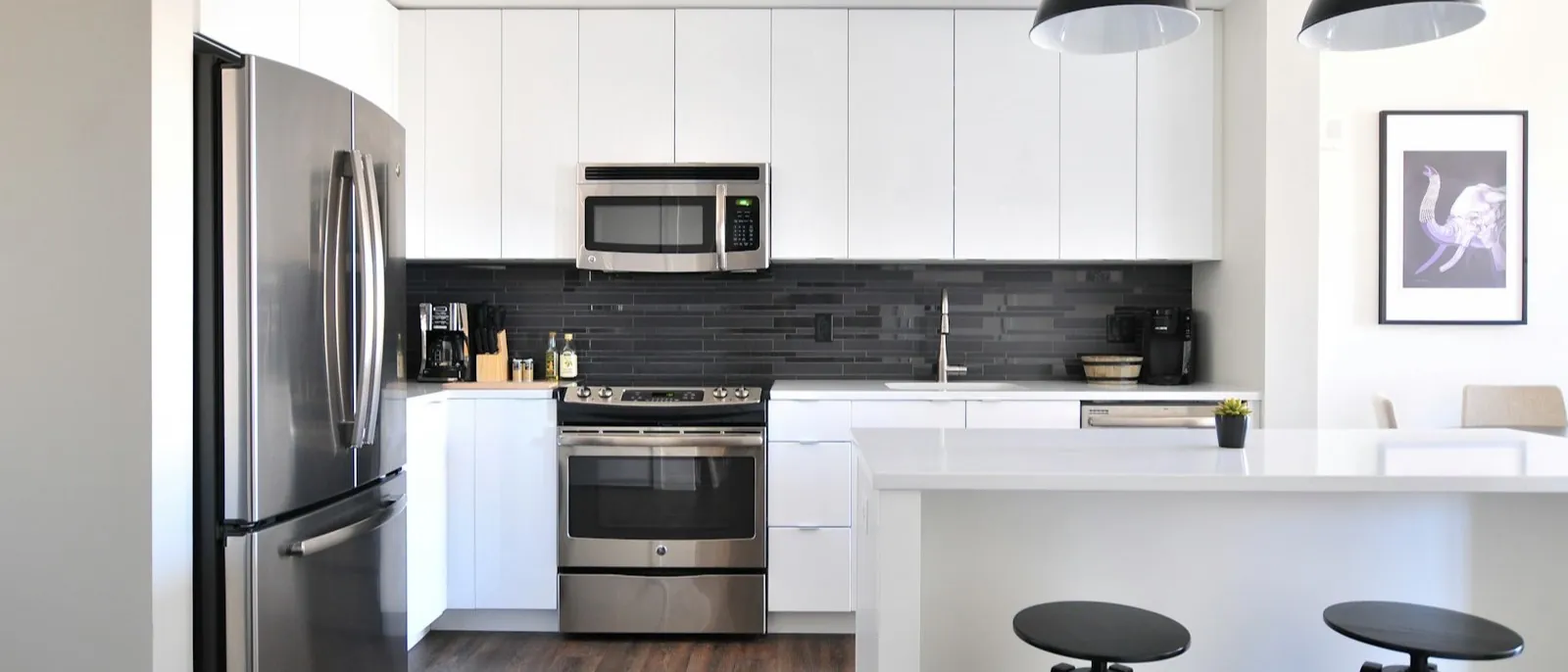
| Decision | IKEA SEKTION | Custom cabinets |
|---|---|---|
| Installed price range | About $150–$300 per linear foot installed; roughly $3,000–$6,500 for a standard 10-by-10 kitchen | About $500–$1,200 per linear foot installed; commonly $18,000–$34,000 for a 20-to-25-linear-foot kitchen |
| Box material | 3/4-inch particleboard frame with melamine foil and plastic edging; fiberboard back | Whatever the specification requires; often veneer-core plywood for boxes, with MDF, plywood, veneer, or solid wood used where each belongs |
| Drawer and hinge hardware | UTRUSTA hinges and MAXIMERA full-extension, damped drawers; strong catalog hardware | Brand, model, load rating, close action, and replacement path are chosen by the shop; quality ranges from ordinary to premium |
| Warranty | 25-year limited warranty on covered SEKTION parts for residential use; receipt and terms apply | No universal term; may run through one local shop, a hardware maker, and a finish supplier under separate written warranties |
| Sizing flexibility | Fixed modules: full-depth base frames are 12, 15, 18, 21, 24, 30, or 36 inches wide, 24 inches deep, and 30 inches high | Can be drawn to the room, subject to appliance, door, hardware, material, and installation limits |
| Assembly labor | Flat-packed; the cabinet frames, drawers, and fittings must be assembled before or during installation, commonly a day or two of work for a full kitchen | Boxes are normally assembled and finished in the shop; site labor still includes delivery, leveling, scribing, fastening, trim, adjustment, and touch-up |
| Lead time | Can be fast when every part is in stock; missing fronts, panels, hardware, delivery slots, assembly, and installer availability can extend it | Commonly 6–16 weeks after approved drawings; complex finish or material work can take longer |
| Lifespan | No single number applies. Installation, leaks, edge damage, hardware use, and replacement-part availability matter; the 25-year warranty is not a lifespan promise | No single number applies. Repairable finishes, replaceable hardware, robust boxes, and a shop willing to service the work can extend useful life |
IKEA is best for a standard rectangular kitchen with a fixed budget, a short schedule, and an owner or installer who can manage the system's parts and assembly.
Custom is best for an awkward room or long-term kitchen where exact fit, unusual storage, finish control, and one accountable builder are worth more than the lowest opening price.
The IKEA plan looks wonderfully clean on a laptop.
Then the room enters the argument.
The left wall is out of plumb. The refrigerator sticks out farther than the drawing showed. A standard base lands beside casing without enough room for the door and pull.
And now that crisp little plan has to bargain with an old house.
None of this makes IKEA bad. It means a modular system and a measured room have to negotiate.
Custom cabinets begin at the other end. The cabinetmaker measures the room, draws the cabinets around it, and prices the result. That can solve more problems.
It also costs more, takes longer, and depends completely on the shop's skill.
So let us give both sides their due.
Where IKEA wins
IKEA wins first on price.
The exact savings depend on what each quote includes, but a SEKTION kitchen usually opens well below a full-custom cabinet package. Current 2026 planning numbers put an installed IKEA kitchen around $150 to $300 per linear foot, roughly $3,000 to $6,500 for a standard 10-by-10 layout. Full custom runs $500 to $1,200 per linear foot installed, commonly $18,000 to $34,000 for a 20-to-25-foot kitchen.
That is not pocket change. For a straightforward rectangle, the system can cover the walls with familiar sizes and leave the expensive invention out of the job.
IKEA also wins on visibility. You can use the planner, see the fronts, open the drawers, read the warranty, and price many components before hiring anyone.
That matters when a custom quote arrives as one mysterious total with very little description.
The hardware deserves a fair sentence too. MAXIMERA drawers fully extend and use built-in dampers for soft closing. IKEA's 25-year limited warranty covers listed SEKTION parts, including cabinet frames, fronts, UTRUSTA hinges, and MAXIMERA drawers, subject to the written terms.
Those are real strengths.
And if the kitchen must be ready for a sale, a rental turnover, or a fixed move-in date, available product can beat more beautiful product that will not exist for another twelve weeks.
Sometimes speed wins.
Where custom wins
Then there is the room.
Custom wins when that room refuses to divide neatly into modules.
Suppose a base-cabinet run leaves an awkward remainder after the available SEKTION widths and appliance openings are placed. IKEA solves that remainder with fillers, panels, a changed cabinet combination, or a changed layout.
A custom shop can often move some of that space into a wider drawer bank or a cabinet built for that exact opening.
The same advantage appears at shallow walls, deep refrigerator panels, sloped ceilings, tall rooms, blind corners, inset work, furniture bases, and cabinets that must meet old trim.
Custom also wins when storage has a name.
“More storage” is vague. A stand mixer, a large platter, dog-food bins, and the household's stockpots can be measured. A cabinetmaker can build around those objects instead of asking them to accept the next catalog size.
Finish is another dividing line. IKEA offers a useful range of fronts, panels, and styles. Custom can match an existing room, tune a paint color, control the sheen, sequence veneer, shape a door, or produce a sample tied to your lighting.
But pay attention here: none of that makes every custom cabinet better.
A careless custom shop can build an expensive disappointment. “Custom” describes how the work is ordered, not how well it is made.
The real cost math
Here is where quote comparisons get slippery.
The number at the bottom of an IKEA product list is not the same thing as an installed custom quote.
IKEA sells the system in parts. On a base-frame product page, doors, drawers, countertop, shelves, hinges, plinths, and cover panels are listed separately. A complete order must gather the correct frames, fronts, drawers, hinges, legs, rails, panels, fillers, toe kicks, trim, organizers, and hardware.
Then the job needs labor.
Ask the IKEA bidder to separate:
- Planning and field measurement
- Cabinet, drawer, and fitting assembly
- Delivery and movement into the house
- Suspension rails, leveling, fastening, and cabinet installation
- Fillers, cover panels, finished ends, toe kicks, and molding
- Appliance panels and clearances
- Countertop templating and support
- Plumbing, electrical, demolition, wall repair, and cleanup
- Return trips for missing or damaged parts
Now ask the custom shop for the same scope.
Our custom cabinet cost guide owns the full installed-versus-boxes breakdown. Use it to normalize both bids.
The cheaper line on paper has not won until the exclusions are visible.
The assembly-time reality
IKEA cabinets are flat-packed. That moves work from a factory assembly line to the kitchen project.
IKEA does not publish a national assembly-time number. Real-world reports from owners and installers put an experienced assembler around 30 to 60 minutes per cabinet, and a full kitchen at one to two days of assembly before installation begins. Each cabinet arrives as several packages. Frames, fronts, drawers, and fittings ship separately, so the sorting alone takes time.
And this is important:
ASSEMBLY AND INSTALLATION ARE NOT THE SAME JOB.
Assembly makes a cabinet frame or drawer. Installation makes a run of cabinets level, plumb, securely fastened, aligned, scribed, trimmed, and ready for appliances and countertops.
A skilled IKEA installer may move quickly because the system is familiar. A first-time owner may spend more time sorting hardware, correcting an early mistake, and discovering that the floor is not level.
Custom cabinetry moves most box assembly and finishing into the shop. The installer still has serious site work, but the pile arriving at the house is usually made of assembled cabinets labeled for the drawing.
When comparing labor, ask for hours or a fixed scope. “Installation included” is not enough if one price includes assembly and the other begins after every box is built.
Materials: particleboard is not a confession
IKEA states the material plainly. SEKTION frames use particleboard with melamine foil and plastic edging, plus a fiberboard back.
That construction gives IKEA a flat, repeatable, cleanable cabinet frame at a mass-market price. It also makes edge protection, dry installation, correct fastening, and prompt leak repair important.
Custom construction varies.
A good specification may use veneer-core plywood for cabinet boxes, MDF for a painted door, solid wood for a face frame or door frame, and hardwood plywood for a finished end. “Solid wood cabinets” can be misleading because broad cabinet panels are often more stable and sensible in a well-selected sheet material.
In other words, material names are not magic spells.
Our MDF vs plywood guide explains where each panel earns its place. Ask both sellers for the box sides, backs, shelves, drawer boxes, doors, finished ends, edge treatment, and finish in writing.
Fixed sizes, filler strips, and dead corners
The March 2026 US SEKTION buying guide lists full-depth base frames at 12, 15, 18, 21, 24, 30, and 36 inches wide. Those frames are 24 inches deep and 30 inches high before legs, toe kick, countertop, fronts, and other finished parts are added.
That is a good modular vocabulary.
It is not every dimension.
When a wall, appliance, casing, or corner lands between the available modules, the design needs a filler, cover panel, clearance, or different arrangement. Fillers are not automatically waste; doors and drawers need room to clear walls, pulls, and out-of-square corners.
The problem is an unexplained filler that consumes useful width because the drawing had nowhere else to put it.
Custom cabinetry can be built to an unusual width or depth. It still needs functional clearances. A narrow filler that lets a drawer clear a crooked wall can be intelligent custom work.
A broad strip hiding a catalog limitation deserves a question.
Use the plan view. Mark every filler and dead corner with its finished width. Then ask what would change if that width moved into storage.
The decision in plain words
Choose IKEA when the room suits the modules and the savings survive a complete labor-and-parts comparison.
Choose custom when the design keeps spending inches on compromises, or when material, finish, storage, and accountability matter enough to justify the longer schedule and higher installed price.
That is the decision.
If neither answer feels clean, compare the middle tier before forcing the choice. Our custom vs semi-custom vs stock guide explains what semi-custom can change and where it stops.
Questions people actually ask
Are IKEA cabinets worth it?
Yes, especially when the room is fairly standard and the budget is tight. Just price the assembly and installation before you decide what “worth it” means.
Then look at the drawing. If IKEA's fixed modules leave broad fillers, storage you wanted but cannot get, or expensive improvisation on site, the savings have started buying compromises.
Are IKEA cabinets good quality?
Yes, SEKTION can be a good modular kitchen. You get 3/4-inch particleboard frames, full-extension damped drawers, soft-close hardware, and a 25-year limited warranty on covered parts.
The rest happens in your house. Careful assembly, square installation, protected edges, quick attention to moisture, and the fronts and fittings you choose all affect how the kitchen feels and ages.
Are IKEA cabinets solid wood?
No. SEKTION frames use particleboard with melamine foil and plastic edging, with fiberboard at the back and steel at the front rail.
The door and drawer-front materials vary by style, so check those separately if a particular material matters to you.
Are IKEA cabinets plywood?
No. Standard SEKTION frames are particleboard with a melamine surface and protected edges.
If your custom bid says plywood, ask for the exact box-core specification. Now you are comparing the actual materials instead of sales labels.
Are IKEA cabinets MDF?
The SEKTION frame is particleboard, not MDF. Some fronts and other components may use fiberboard.
Open the materials section for the exact front, panel, and drawer combination you plan to buy. One label cannot describe every piece in the kitchen.
IKEA cabinets vs Home Depot?
IKEA gives you one main flat-pack modular kitchen system. Home Depot gives you several stock and special-order lines, each with its own materials, sizes, assembly state, warranty, and path to installation.
Pick the exact Home Depot line before you compare it with IKEA, and price the same installed scope on both sides. For the larger store-versus-custom decision, use our custom cabinets vs big-box stores guide.
Do IKEA cabinets come assembled?
No. Open the cartons and you have flat-packed frames, drawers, and fittings that still need to be assembled before or during installation.
Budget for those hours. Flat packing does give you something back: it helps IKEA hold down the opening price, and the pieces will go through a stairway or old doorway that might stop an assembled cabinet cold.
How long do IKEA kitchen cabinets last?
Reports from owners and installers put the useful life of an IKEA kitchen at roughly 10 to 25 years. Plenty of households get a full kitchen's use from one.
Just don't read the 25-year limited warranty as a promise that every kitchen will last that long. Assembly, wet edges, how quickly you catch a leak, daily wear on the hardware, and access to matching parts all move that number.
Does IKEA install kitchen cabinets?
Yes. In participating U.S. markets, IKEA can quote kitchen installation through a contracted independent installer.
The job can include assembly, fitting, trim, and worktop installation. Demolition, utility connections, and other supplementary work may require separate agreements, so circle every exclusion before you sign. And don't confuse this service with Taskrabbit assembly; Taskrabbit excludes kitchen installation.
How much does it cost to install IKEA kitchen cabinets?
For 2026 planning, use about $150 to $300 per linear foot for an installed IKEA cabinet package. Your actual IKEA installation price comes from the finished plan and local scope; there is no national labor-only rate hiding inside that range.
Now walk down the quote with your finger. Assembly, delivery, fillers, panels, trim, countertop support, and return trips all have to be paid for somewhere.
Do the same with the custom quote. Same drawing, same work, then compare the bottom lines.
What depths do IKEA SEKTION cabinets come in?
SEKTION full-depth base frames are 24 inches deep. Shallow base and wall frames are 14 3/4 inches deep.
Most kitchens work with those depths. If yours has an old wall, tight passage, appliance panel, or special item to store, the fixed choice may cost you space; a custom cabinet can be built to the depth the room actually gives you.
Can IKEA cabinets hold quartz countertops?
Yes. A correctly installed SEKTION run can carry quartz when it has the support required by the fabricator and the cabinet system.
IKEA has sold quartz countertops for SEKTION and specified support fittings for the job. If you're comparing bids, compare who supplies and installs that support. The boxes don't deserve the blame for a shortcut above them.
Can you put custom doors on IKEA cabinet boxes?
Yes. Third-party makers sell doors and drawer fronts sized and bored for SEKTION boxes.
For some kitchens, that is the sweet spot: IKEA's lower-cost modular boxes with a face or finish the standard catalog doesn't offer. But you now have more than one company in the result, so write down who owns the measurements, hinge boring, warranty, missing pieces, and final fit.
What happens when IKEA discontinues a kitchen line?
Matching parts can become difficult or impossible to buy after IKEA replaces a kitchen system. Today's IKEA doors, for example, do not fit discontinued AKURUM cabinets.
If a covered item is no longer sold, IKEA's warranty lets the company choose an appropriate replacement. Appropriate may not look identical.
Most homeowners never need another matching cabinet or door, and third-party makers still produce doors for AKURUM kitchens. But if you expect to change or repair the kitchen years from now, a local shop's ability to reproduce one part is a serious point in its favor.
Is the IKEA kitchen warranty transferable?
No. IKEA's 25-year SEKTION limited warranty belongs to the original purchaser and ends when the kitchen is sold.
Give the next owner the receipt and order records so the products can be identified. Just don't sell the warranty with the house: generous as that term is (and it is longer than most custom shops offer), the buyer does not inherit it.