Best Wood for Kitchen Cabinets: Oak, Maple, Cherry and More
Compare oak, maple, cherry, hickory and other cabinet woods by dent resistance, grain, finish and cost direction before you approve a sample.
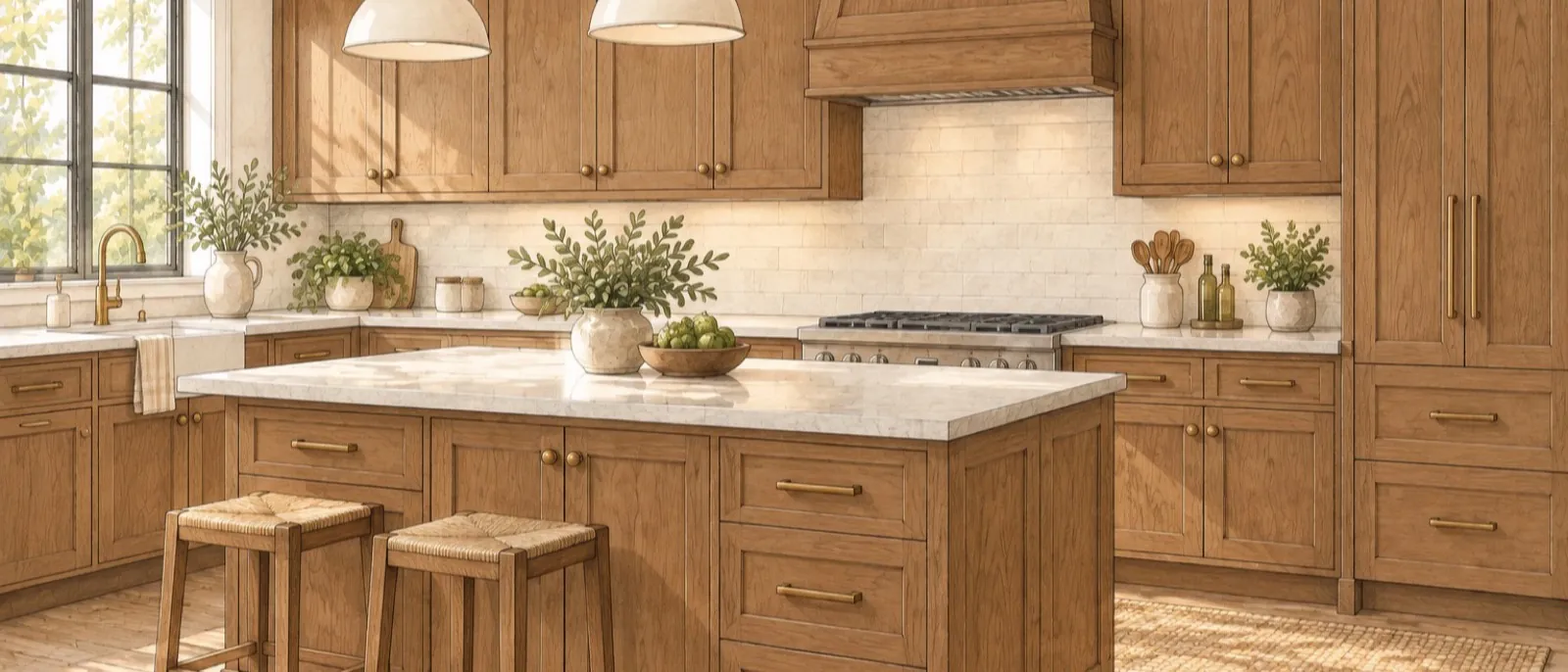
Cabinet woods compared
Use the hardness column to compare dents. Pecan hickory has the highest Janka side-hardness value in this table at 1,820 lbf, followed by sugar maple at 1,450 lbf.1 The test measures indentation; it doesn’t tell you how long a cabinet or its finish will last.1
Every hardness value belongs to the exact species named and uses 12% moisture content.1 Use the finish column to choose your samples. Use the cost column to decide which woods you want priced, then get a project quote.
| Wood | Janka side hardness | Grain and look | Paint or visible-wood finish | Relative cost direction |
|---|---|---|---|---|
| Northern red oak | 1,290 lbf1 | Brown with reddish tones; prominent grain2 3 | Stain candidate; absorbs stain well8 | Lower to mid7 |
| White oak | 1,360 lbf1 | Generally grayish-brown heartwood2 | Stained or clear-finished candidate7 | Higher9 |
| Hard maple: sugar maple | 1,450 lbf1 | Fine, uniform texture; pale sapwood2 | Paint; test stain for uneven color3 4 | Mid for stained work7 9 |
| Hickory: pecan | 1,820 lbf1 | Pale sapwood and darker heartwood2 | Visible-wood candidate; approve color variation8 | Mid to higher7 |
| Black cherry | 950 lbf1 | Reddish brown; fairly uniform texture2 | Visible-wood candidate; darkens with light6 | Mid to higher7 9 |
| Black walnut | 1,010 lbf1 | Brown heartwood; nearly white sapwood2 | Natural finish; color can lighten with light2 5 | Higher7 9 |
| Red alder | 590 lbf1 | Almost white to pale pinkish brown2 | Paint or stain sample3 7 | Lower to mid in one shop’s guide7 |
| Yellow birch | 1,260 lbf1 | Fine texture; pale sapwood, reddish-brown heartwood2 | Paint or stain; test for blotching6 8 | Lower in one shop’s guide7 |
| Eastern white pine | 380 lbf1 | Straight grain; light-brown heartwood2 | Ask for the selected grade and finish sample | - |
| Yellow-poplar | 540 lbf1 | Generally straight grain; heartwood may have colored streaks2 | Paint-grade choice6 8 | - |
| American beech | 1,300 lbf1 | Close, uniform texture; limited figure2 | Paint candidate; inspect the sample3 | - |
Our sources give no cabinet cost direction for pine, poplar or beech. Ask for a quote.
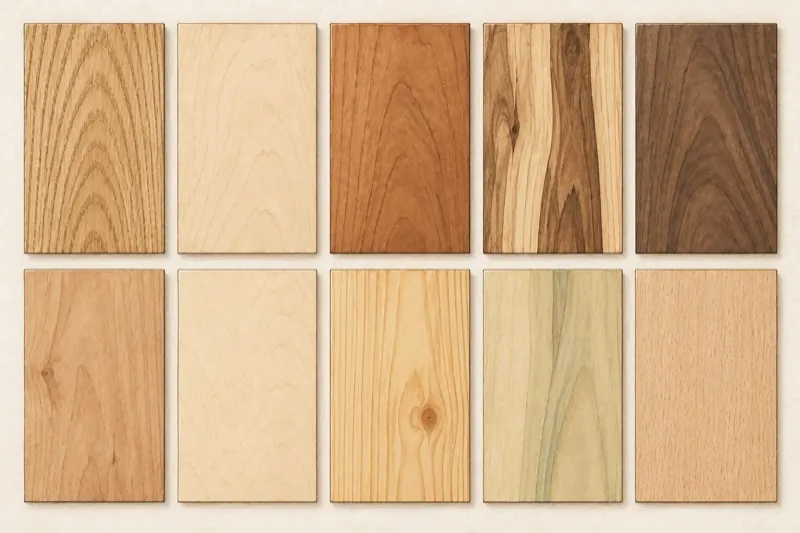
How to choose
Use this order. First, pick opaque paint or visible wood. Then use the hardness numbers to compare dent resistance.1
Next, put several finished samples from the quoted grade in your kitchen. Tell the cabinetmaker how much light and dark wood you’ll accept. For cherry and walnut, ask how light exposure can change the color.5 6
Finally, give every shop the same door design, finish and cabinet construction to price. Compare dent resistance with the hardness number. Decide on the appearance from the sample and the cost from the written quote.
Oak: red and white
If you want visible grain, start with red and white oak. Northern red oak rates 1,290 lbf, while white oak rates 1,360 lbf.1 Red oak has reddish-brown heartwood, white oak is generally grayish brown, and one cabinet-door maker says red oak absorbs stain well.2 8
Put full finished doors beside each other. Look at the grain across the frame and center panel. A small sample chip can’t show you all of it.
Our white oak cabinet guide covers that species’ cuts and finishes in detail.
Maple
For painted cabinet fronts, put sugar maple on your sample list. It rates 1,450 lbf and is a solid paint choice.1 3 The texture is fine and uniform, with commonly white sapwood and light reddish-brown heartwood.2
Now check the quote. Hard maple and soft maple are different commercial groups, and this hardness number applies only to sugar maple.2 Make the shop name the species.
If you want stain, insist on a finished sample. Maple can absorb stain unevenly and look blotchy.4 6 Don’t approve the order until you’ve seen the shop’s actual finish.
Cherry
Choose black cherry when you want reddish-brown wood with a fairly uniform texture. It rates 950 lbf.1 2 Cherry gets darker when light hits it.6
Put a fresh sample beside an older example. Black cherry has pale sapwood and darker heartwood, so tell the shop how much of each you’ll accept.2
Cherry’s hardness rating is lower than the oak and hard-maple values in this comparison.1 That’s the tradeoff you’re accepting when you choose its color. A higher quote doesn’t mean the wood resists dents better.
Hickory
If dents are your main worry, look at pecan hickory. It rates 1,820 lbf, the highest side-hardness value in this comparison.1 The sapwood is white or nearly white, and the heartwood is darker.2
Ask which hickory species and grade the shop supplies. This number belongs to pecan, so don’t use it for every wood sold as hickory.
Next, look at several finished doors together. A cabinet-door maker warns about substantial color variation and difficult stain absorption in hickory.8 Decide how much contrast you’ll accept before the shop starts work.
Walnut
Choose black walnut when you want natural brown wood. It rates 1,010 lbf, with heartwood from light to dark brown and nearly white sapwood.1 2 It’s well suited to a natural finish.2
Sunlight can fade walnut’s natural dark color.5 Ask how the shop will select the boards and finish every visible part. Point to the amount of pale sapwood you’ll accept on the sample.
Expect walnut to price higher in the cabinet sources used here.7 9 Compare the exact specification in your quote. That higher price doesn’t change the hardness number in the table.
Alder
Look at red alder if you like an almost white to pale pinkish-brown wood. It rates 590 lbf.1 2 You can use it for painted doors or stained cabinetry when you’re comfortable with a softer wood.3 7
One custom cabinet shop puts alder among its lower-cost species.7 Ask your shop to price it. Have the quote name the clear or knotty selection, then approve the actual finish.
Alder’s rating is well below the oak and maple values here.1 If dents bother you, compare those harder choices before you decide.
Birch
Yellow birch has a fine, uniform texture and rates 1,260 lbf.1 2 Its white sapwood and light reddish-brown heartwood can look different across cabinet parts. Ask how the shop will match them.2
You can paint or stain birch, though stain can look blotchy.6 8 Have the shop make your sample with the finish it plans to use.
One shop places birch in its lower-cost group.7 Check your own quote and confirm the species. Use the yellow-birch hardness value only for yellow birch.
Pine
Eastern white pine is light brown, generally straight-grained and fairly uniform. It rates 380 lbf, the lowest side-hardness value in this comparison.1 The heartwood gets darker when air reaches it.2
Have the cabinetmaker name the species and grade, then show you the proposed finish. A quote that says only “pine” needs more detail.
Get a project quote before you call pine the least expensive choice. This guide has no verified general cabinet-cost ranking for eastern white pine.
Poplar
For painted parts, ask to see yellow-poplar. It rates 540 lbf and is a paint-grade option.1 8 Your quote may call it poplar or tulip-poplar.2
The heartwood can have green, purple and other colored streaks.2 Look at the painted sample before you decide.
Some manufacturers use poplar frames with medium-density fiberboard center panels on painted doors.6 Ask which material goes in each part. Ask how the shop protects the exposed poplar edges, where the lower hardness still matters.1
Beech
Ask to see American beech if you want a close, uniform texture with relatively little figure. It rates 1,300 lbf.1 2 Beech is also a candidate for painted cabinet doors.3
Make the shop name American or European beech on the quote. Use this hardness number only for American beech.
American beech can have nearly white sapwood and reddish-brown heartwood.2 If you’ll see any of the wood, inspect the proposed sample. Then get a quote for availability and cost.
Best wood for painted cabinets
If you’re painting the cabinets, start with maple and poplar for solid-wood parts. Medium-density fiberboard is another option for doors and center panels; then decide how the door will be built.3 6 Our Shaker cabinet door guide explains that choice.
Have the quote name the frame material and panel material. Then approve the finished sample. Under opaque paint, ask what you get for any visible-wood upgrade.
Best wood for stained cabinets
For stained cabinets, start by putting oak, cherry and walnut samples beside each other.2 8 Oak has prominent grain, cherry is reddish brown, and walnut has brown heartwood suited to natural finishes.2 3 You can stain maple and birch too, though uneven absorption needs more attention.4 6
Have the shop finish each sample from the quoted wood and grade. Pick one, sign it and keep it with the order.
Solid wood, plywood, or MDF: where each belongs
Your doors and cabinet boxes can use different materials. Tell the shop where you want solid wood, then have the quote name the box and panel materials too.
For example, painted doors can use solid-wood frames with medium-density fiberboard panels.6 Our cabinet sheet-material comparison explains plywood and medium-density fiberboard choices. If the shop quotes a veneered panel, ask what’s inside it and what wood you’ll see.
What wood choice does to the quote
Now compare the price. Walnut and white oak are higher-cost choices in our existing cost guide; stained maple and cherry have smaller listed premiums over its painted baseline.9 You still need a price for your project.
Our custom cabinet pricing guide covers the full quote. Give the shop one door design, finish, construction and installation scope, then ask it to price each species on that same work.
Questions people ask about cabinet wood
What is the best wood for kitchen cabinets?
There’s no single best wood: start with maple for painted fronts, oak or walnut for visible grain, and hickory when dents worry you most.1 2 3 Pick from finished samples, then compare the complete quotes.
What is the most durable wood for kitchen cabinets?
For dent resistance among these entries, pecan hickory ranks highest at 1,820 lbf, followed by sugar maple at 1,450 lbf.1 Those numbers cover indentation only. Check the cabinet construction and finish separately.
What is the least expensive wood for kitchen cabinets?
Birch and alder are lower-cost candidates in one cabinetmaker’s guide, though no species is cheapest for every order.7 Have each shop price the same door, finish and construction.
What is the most expensive wood for kitchen cabinets?
Walnut has the highest species premium among the choices in our existing custom-cabinet cost guide.9 That comparison applies to the choices in that guide. Ask for a quote with your grade, finish and project.
Is alder wood good for kitchen cabinets?
Yes, red alder can work for painted or stained cabinets if you’re comfortable with its relatively low 590 lbf hardness.1 3 7 Put its finished sample beside the harder choices if dents concern you.
Is birch wood good for kitchen cabinets?
Yes, yellow birch has 1,260 lbf hardness and a fine texture for cabinet parts.1 2 You can paint or stain it. If you choose stain, approve the sample because blotching is possible.6 8
Where these numbers come from
Every hardness value is a side-hardness result for the exact species named, at 12% moisture content.1 Use it to compare indentation resistance in tested wood. Don’t use it as a promise about the cabinet’s lifespan or finish.
The finish guidance comes from the manufacturer sources. The cost directions come from the cited cabinet guides. Before you order, approve a sample and get the quote in writing.
- USDA Wood Handbook (2021), Chapter 5: Mechanical Properties of Wood
- USDA Wood Handbook (2021), Chapter 2: Characteristics and Availability of Commercially Important Woods
- CabinetDoors.com: Wood Types for Painted Cabinets
- General Finishes: How to Achieve a Dark Uniform Stain Color on Maple
- Woodworkers Source: Walnut Color and Finishing
- WalzCraft: Wood Species and Grades
- AB Custom Cabinets: Custom Cabinet Materials
- B&B Cabinet Doors: Wood Species
- Cabinetshop.com: Custom Cabinet Cost